Peter Brook’s “The Empty Space” Chapter 1

Chapter 1 titled “The Deadly Theatre” began with a simple introduction that pleasantly surprised me. Who knew theatre can be split into four parts? According to Brook this is “Deadly” “Holy” “Rough” “Immediate” or a random combination. At first I found Deadly theatre to be a confusing concept in where it applies. In my notes throughout I have Deadly theatre associating with “bad” or “commercial” theatre however upon reading further Deadly theatre applies to theatre which “fails to instruct, elevates. or entertains”.

This explanation thrown a new perspective to think about in theatre aftermath of a show and perplexed me initially. Brook then went into how the audience gets satisfaction intellectually or through shock. I wasn’t too sure how to digest that point as I feel something doesn’t sit right within me regarding that point. It became a little more universal when Brook compares Deadly theatre to a whore who takes your money and has fun with the short time you’ve given it. A crude way to place it but Deadly theatre takes more shape now because of it. How I understood this was it’s a show that takes too much pride in how it is to the craft rather than to the audience. Personally I am all for theatre that doesn’t aim to wow and astound the audience but instead tell a story or make social commentary etc. However when you are a theatre that requires revenue it might be helpful to try and please your audience.

The prime example of Deadly Theatre Brook points to is Shakespeare. Before my confusion could flourish Brook explained it as something that bores an audience which made me realize that everyone else doesn’t have the same adoration/excitement I do when it comes to the bard….unfortunately:(((.

This attitude can be applied to Phillip Connaughton’s “Assisted Solo”. An audience may initially be turned away from the piece as it is interpretative dance. Worries of not being able to relate without a dancing background may restrict people from going or in Shakespeare’s case not having a personal understanding of early modern English.

However to further confuse the works Brook claims there is a need for boredom to be apparent as too much boredom bares the obvious effect whereas a lack of it creates intensity which could cripple the message certain scenes tries to emit.

When i relate to this point I resonate with both “The Mai” and some movement based exercises in class. The Mai for me personally contained too much scenes with emphasis on boredom which relied on dialogue from certain characters to keep it alive. In class I feel that some movement based exercises which can feel like their dragging on forever build up an excitement/anticipation within me that doesn’t exactly connect with the exercise (Prime example being improv related exercises)

I am given a severe mental contrast to the ways of old and newer modern approaches to Shakespearean text later as Brooks on page 11 mentions how new actors want to “Play his verse more realistically, to get it like honest-to-God real speech”. I can see where Brooks is coming from with this point, nowadays just about everyone wants to standout as an actor who has their trademark “spin” on a text to really feel comfortable and convey their character in their own image rather than what the text intends.-Actors want to be more realistic-

I can apply this sort of logic to Jimmy’s Hall which cleverly used its communist values and social commentary which was very much relevant to its setting and even todays society.

Peter funnily enough points that out in a clever way explaining how the text itself doesn’t exactly tell the actor how it was originally brought to life during the time it was written.

In Conclusion Chapter 1 was very thought provoking and introduced brilliant approaches to segmenting theatre.


Week 5 at UCC

Monday began with our routine waking up exercises which were then followed by new stretching exercises which don’t excite me much honestly. Instead I see them as a means of preparing for the more challenging and rewarding tasks set out to us by Eadaoin. This edition being a more familiar improv setting. The group of 5 on one side of the room work together to set up a scene which needs an event of some sort to occur. However in order to make this event flow naturally the action needed to be justified.

Looking back there is an element to strategy to this exercise as well as restraint (that part really resonated with me…). Those in the Quintet had to make their scene simple enough for the audience to understand the setting but not obvious in the dialogue; eg “Hello mother I’m in the train station, train station!”. Where I struggle most in the exercise is trying to be boring. In most cases I’ve been the most outrageous and unjustified character in each case.

Tuesday introduced more stretches that I don’t have much to say in terms of reflection other than the ease of movement. We later added to last Tuesday’s musical based exercise. We later came to the conclusion that we became stuck in what we could do with the story of the boy named “Lost”. Our new exercise contained a more traditional sense of being lost and involved all of us rather than focusing  on the individual.

Friday’s class in terms of our movement played to my weaknesses of bending my knees that are stiff from the bitter morning prior to class. We then moved onto the more comfortable pendulum based movements which I gain enjoyment out of purely for releasing all control of my body.

A return to the same improv exercises from Monday saw the return of my habits of causing something without justification. However come second time round I had held myself back and simply played a mundane character who blended into the scene. It wasn’t as satisfying as blowing a scene out of proportion but rewarding in a more boring sense.

We moved onto the brainstorming of our observations made from a public place. We came to an entertaining conclusion. It was fascinating to explore the narrative possibilities gathered from the world around us. Unfortunately we ran out of time.

Week 4 at UCC

Monday started off with the staple massage and warm up following the closure of last Friday’s exercise which gave me great reflection on how the exercise works best with simplicity and gay abandon to what you’ll do next. There was not any other aspect of Monday’s class that I could reflect upon.

Tuesday however was more interesting and exciting. We began with a long warm up in breathing, hip location (And discussion of the hips in terms of society and anatomy). I did begin to tire of the exercise after a bit and yearned for something more practical. Fortunately we moved onto another ensemble exercise of walking in a numbered pattern back and forth across the room. This was a nice challenge in terms of focus without looking at your ensemble for support too much. Reflecting on it, I think of the satisfaction gained from doing the exercise properly not only from the ensemble but the “instigator” (as in who started us off in our steps). We then moved onto a new variant of lasts week being musical of being lost however we had to incorporate the previous stepping exercise into our short piece. Reflecting back onto our “Wizard Of Oz-esque” piece it given me a great sense of achievement in working alongside others in a short space of time where everyone knew what they were doing and that we were all constructing upon the idea in better ways than before. It was a piece that we felt was solid.

Seeing the other groups preform their new “lost” routine provided some different and entertaining perspectives that worked well to each ensemble members strengths.

Friday’s class started with our regular massages which upon reflection made me realize…they’re really enjoyable and i’m getting rather used to them. We then came onto an exercise simple in theory but vast in possibility, we simply had to establish contact with everyone in the room and simply state “Look at me”. I couldn’t find any profound meaning behind the exercise unfortunately so I played around with the various emotions you could have with telling a room to look at you. We embarked upon an unintentional improv exercise as the result of not going out in our individual groups to a public area and observing it to later act out. Even though the exercise was entertaining I feel it will be more worth while and interesting once the groups go into the feild

“Assisted Solo” Review

Choreographed by; Phillip Connaughton in collaboration with Lucy Kickham and Magili Caillet
Funded by; The Arts Council in partnership with The Projects Art Centre
Supported by; Dance Ireland
Developed at; The Fringe Lab with support of The Dublin Fringe Festival
Seen at; The Everyman Theatre September 22nd

This show is truly “out there” in many aspects.
From its narrative, tech and choreography Phillip has created a very reflective piece for both himself and his audience. Initially the lack of dialogue and bizarre movements may throw an audience off which is something Phillip knew and regardless went onwards with his vision. It was rather difficult to understand some of the movements in the early parts as they are not given context to or in the odd case being blatantly obvious as to what they were. Shortly after the opening perhaps the most uncomfortable scene in which Phillip explores his sexuality as a child serves to be a landmark scene in the show. This worked well due to the intentional extended length of the scene and vulgar nature which serves as a means of not being so rigid around sensitive issues around sexuality and curiosity.
Lucia and Magili do a wonderful job in terms of chorography especially solo scenes with Magili in which she explored a perspective of dementia where she expresses the loss of ability in simple tasks. Lucia on the other hand is a formidable dancer but was not part of such monumental scenes in my opinion therefore making me pay less attention to her.
What made the piece likable was the screen above stage which played short clips of Phillip and his Dementia suffering mother going through everyday life together. How this works well is it can be seen as a universal concept as in people taking care of one another but what is more interesting about this is that Phillip explains it in a way that takes away the immediate pity and awkwardness that comes from mentioning something like dementia.
With this knowledge it shows his mother as a very upbeat individual who retains great character and humour.
In conclusion the aspects which might fly over an audiences head is better explained by Phillip on the after show discussion which enriches the piece as a whole and solidifies a deeper appreciation in the piece


Week 3 at UCC

We began this week by being  joined by Jool’s who came to discuss “Assisted Solo” which we saw the previous Saturday. We discussed the impact it had and explored the different ideas going on within the show. I added that the post show discussion was essential as a part of my understanding of the show as throughout I was completely over analyzing and the significance of scenes as a result flew over my head. The Popeye scene with the intense pornographic audio in the background was then discussed (since it was on everyone’s mind) and we speculated as to why we had been left so uncomfortable throughout. This discussion given me a better insight to Phillip’s method in the bizarre artistic choices he made and a greater appreciation in the end.

Afterwards, we saw the continuation of the tableau scenes in which we get a feel from our fellow ensemble as to when we address the audience with our turning heads.

Tuesdays class was new and refreshing in terms of the exercises we tried. Jool’s given us exercises similar to what an outsiders perspective to a choreographers warm up is. We walked from one end of the room to the other diagonally in the rhythm we were instructed. After the break we ventured into more familiar territories as an experienced ensemble with an exercise in which one person wanders the stage being lost and how they need to find their way. This saw brilliant variants in plot and humor which was welcome  and added some excitement from the previous calmness and serenity of the weeks prior to this. Playfulness of this exercise was greatly explored when a musical element was added. It was a great self refection on the religious based humor Irish members of the group could relate to.

Friday’s class consisted of the one exercise. Eadaoin set us in our childhood rooms to explore different emotions and connections/ties to our nostalgia. The focus of the exercise was to bring out emotions in a way that came off as natural and playful in a sense (eg; Playing around with looking at your reflection in the mirror, sticking out your tongue, making faces etc.)

My experience with this was somewhat difficult as I had unconsciously planned out what I was going to do (Despite this exercise being improv based) My issue originates from trying too hard in expressing emotion, so much that I bring to mind the style of “old timey silent movie clowns”. I’ll eventually overcome that habit like the others before me.

IMG_3590.JPG
Think of this photo as a metaphor of Friday’s exercise. (Looking back on the memories and inhibiting the nostalgia associated with it)


“Week 2 at UCC” By David

This week centered around becoming fluid as both an ensemble and an actor individually.

The exercises Monday were really enjoyable and invaluable in terms of learning how to flow with your fellow actors. The first exercise involved talking about a mundane subject (eg  I talking about something I ate recently.) while the two supporting actors behind the main speaker would amplify what the speaker was saying to add more impact to the subject. After a while the speaker would move to their right and be an supporting actor to the next person who would slightly modify the previous topic. This exercise was both entertaining and insightful as personally I discovered a terrible habit of focusing on my individual work rather than the speakers in this exercise. I would later control this better throughout the week.

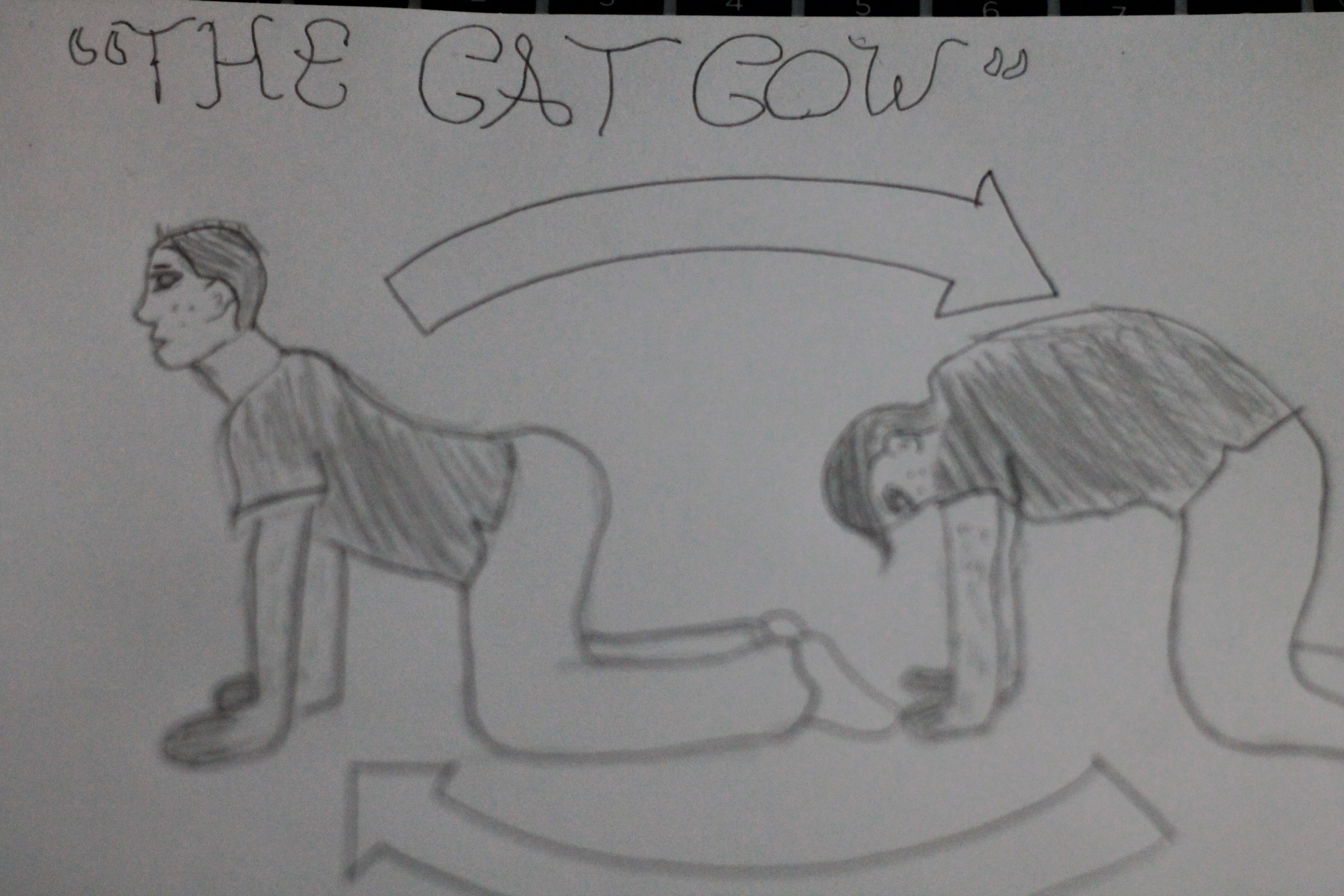
Tuesday saw the first of the personal growth of ourselves physically with the beginning being Eadaion demonstrating the “Cat Cow” yoga exercise and asking us to try it. The purpose of doing this was to improve and promote a healthy spine. Even after doing the exercise that day i felt that bit more flexible in my movement. The other exercise that day which stood out to me was the tableau like scenes we did out of pure instinct. The exercise was focused on not hesitating when it came to getting up with four other actors and the connected movements into different scenes. Reflecting on it, I felt a great deal of discipline and teamwork from this exercise as simply leading the change in the piece was not as satisfying and smooth when compared to the ensemble relying on one another to synchronize the finish (being the unanimous turning of our heads).

Friday’s class was similar to Tuesday in terms of the yoga like exercises but the class was purely self expressive. Jools’ return brought exercises that felt like a detox for the built up stress in our bodies. First we began with a slow movement that stretched the spine and focused on breathing. This went on for some time which I was not bothered by, I was genuinely enjoying this exercise. Afterwards yoga mats were brought out for the remainder of the class. Here we lay down in a resting position where we began deep breathing. We then progressed onto adding sound to the breathing beginning with a sigh which then escalated to a more elongated sigh with vowel sounds on it. We we’re given free reign to play around with these new sounds after a bit. I’m not exactly sure what the purpose of the exercise was as a whole but my personal gain from it was a restart of my vocal chords that allowed me to reach great heights with it after being barely able to speak the previous week as the result of a cold.

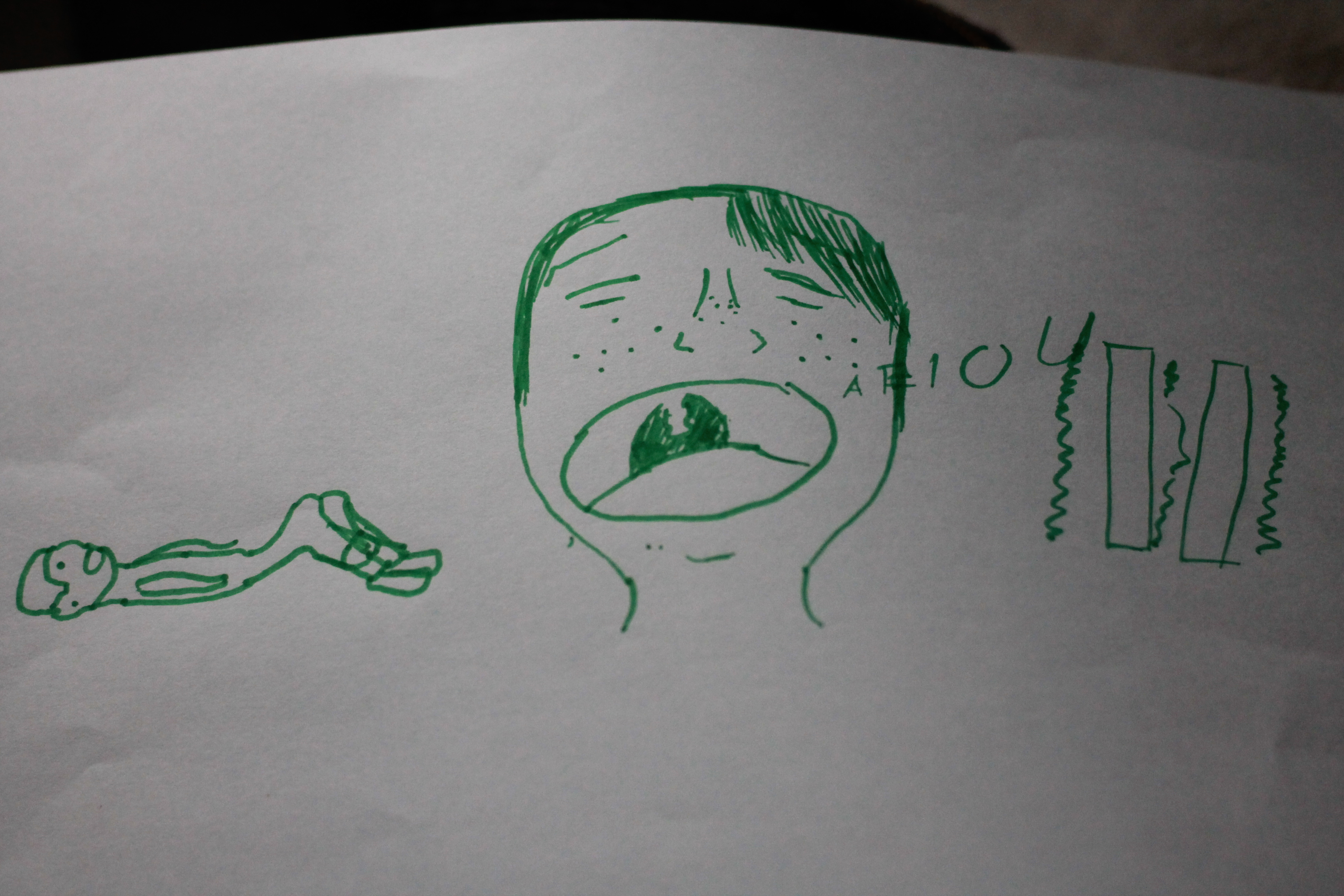
I could feel rejuvenated in the vocal aspects. Once that exercise came to an end we were given pens and paper to illustrate the experience we had in class. Once completed we shared them with one another. From what I could see everyone’s drawings were interpretative and  artistic whereas mine was rather literal. The first drawing on the second attached picture shows the position we began in. The next was myself mouthing out the vowels in the sighs. The final one represents my vocal chords getting some use out of them.

This week has been more relaxing and about self therapy. I look forward to what next week has in store.


First Week at UCC

My first drama lecture at UCC began with Jules placing us into ensemble exercises which I found to be abstract and very unusual compared to what i’m used to in auditions and workshops. The exercise that stood out to me that first day was the mirroring based one in which Jules moved in unpredictable movements. Whoever she approached in the circle would have to mimic her. I have done exercises similar to this but what made this particular one stand out was the gibberish based language she added to her movements which honestly made me feel uncomfortable, regardless I participated with no objections. I am still trying to explore the reasons and thinking for this new, unfamiliar approach to theatre exercises.

Eadaion then took over and went through some exercises which weren’t as difficult to understand. We wandered round the space and greeted the people we would meet in various ways. Examples being a meeting of the eyes, jumping at the same time or even crawling through their legs. The point of this exercise was to strip back the self awareness of making mistakes which could threaten the flow of ensemble pieces. Once we purposely fumbled the greetings with one another it removed that mental block of knowing we did it wrong and allowed us to flow more easily as an ensemble.

The rest of the week involved similar exercises which encouraged our creativity as actors (Jules) and creating a synergy within an ensemble (Eadaoin)